Loose leaf tea asks one small favour: room to move. Water has to circulate around each leaf, and the leaf needs space to unfurl — a rolled oolong can double in size, and silver needle buds open more slowly than most people expect. The infuser you choose decides how much of that actually happens. Choose well and two teas from the same farm taste plainly different. Choose badly and good leaves brew thin and bitter. Here is how the three common styles behave in a real kitchen.
What Actually Matters
Before comparing shapes, it helps to know what you are judging.
- Leaf room. The internal space available for expansion. This shapes the cup more than anything else on the list.
- Perforation size. Holes too large let fragments and dust through; holes too fine slow the water and leave you waiting.
- Cleanup. How easily spent leaves come out, and whether the material holds stains or smells.
- Durability. Hinges, clasps, seams and coatings are the parts that fail first.
- Value. Cost divided by years of use, not the number on the box.
A cheap infuser that dents within a season is not a bargain, and a well-made one that lasts a decade often costs less per cup than the tea you put in it.
Basket Infusers: Room to Breathe
A basket infuser is a small stainless steel colander that rests on the rim of your mug, with fine perforations around the sides and base. It is the closest thing to brewing in an open pot while keeping leaves out of your teeth.
It handles whole-leaf tea of every kind: long twisted leaves, rolled oolongs, chunky herbal blends with bits of cinnamon bark or dried fruit. When the tea has steeped enough, you lift the basket clear and the brew stops. That one motion gives you more control than any other style.
Where it struggles is fit. Baskets come in a range of diameters, and one that hangs awkwardly in a narrow mug leaves gaps where water bypasses the leaf. Cheap versions with coarse holes let fannings escape. And a basket is not something you tuck into a pocket.
Cleanup is easy: tip the leaves into the bin or compost, rinse, and brush the perforations weekly. A paste of baking soda and water lifts the brown film that builds up on steel.
Ball Infusers: Handy, But Only for Some Teas
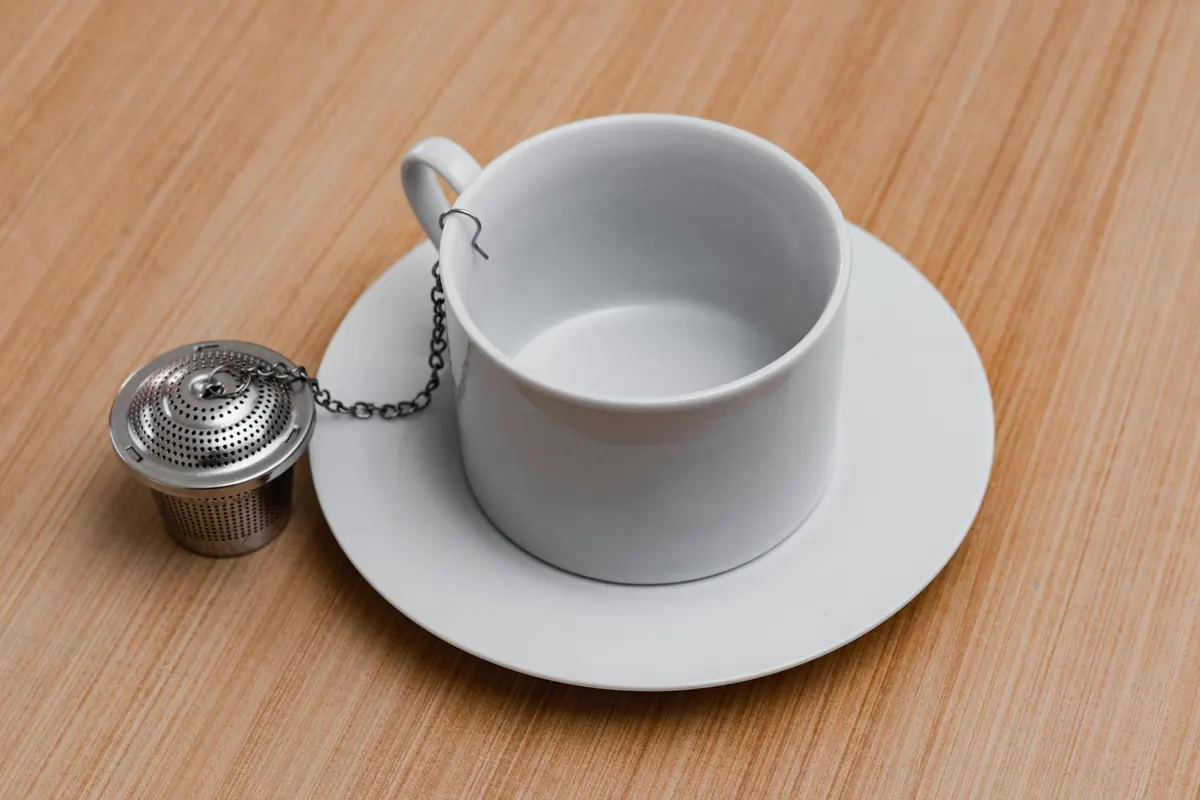
The hinged sphere is the infuser most people already own, and the one that disappoints most often. The mesh is rarely the problem; the volume is. A ball holds a teaspoon or two of leaf with nothing spare. Rolled oolong, large-leaf black tea and long buds jam against the seam and stay dry in the middle, so you get a weak first cup and a harsh second.
It does have a place. Fine-cut and broken-leaf teas work well: rooibos, small-leaf greens, CTC blends, finely chopped herbal mixes. It is also unbeatable for travel — it fits in a pocket and works in almost any cup.
If you already own one: fill it no more than a third full, shake it gently halfway through the steep so the leaves redistribute, and keep your smallest-leaf teas for it. A ball that has lost tension can sometimes be bent back into shape with pliers, but hinge repairs rarely hold.
Silicone Infusers: Easy to Live With
Silicone infusers are usually baskets or cups, often with a lid that doubles as a drip tray. Food-grade silicone is generally rated well above boiling, so heat is not the worry it is sometimes made out to be. Flavour and shape are.
Silicone is slightly porous and can hold on to strong aromas. Brew a smoky lapsang souchong or a spiced masala chai, and a delicate white tea the next morning may carry a ghost of it. Turmeric-heavy blends and hibiscus stain the walls, which is cosmetic but irritating if you like clean-looking gear.
Soft walls matter too: leaves press against the side rather than floating freely, and a floppy basket can slump in a wide mug. Against that, silicone is quiet, gentle on ceramic and glass, often dishwasher-safe, and packs flat. It will not chip your favourite mug.
Keeping silicone fresh
Rinse under hot water as soon as you empty it, rub a baking soda paste into stained areas, and leave it ten minutes before rinsing. Boiling the basket briefly in plain water clears lingering smells. If you drink spiced blends often, keep a separate infuser for them.
Side by Side
- Leaf room: basket first by a wide margin, silicone in the middle, ball last.
- Cleanup: baskets empty fastest, silicone washes easiest, balls are fussiest.
- Durability: steel outlasts most kitchens; silicone lasts years but folds can crack.
- Control: only the basket lets you stop extraction by lifting the leaves clear.
- Portability: ball first, silicone second, basket a distant third.
How to Get a Better Cup From Any Infuser
- Warm the mug and the infuser with hot water first. It takes ten seconds and protects your brewing temperature.
- Weigh the leaf when you can. Many teas brew well at roughly two to three grams per 200 ml, then adjust to taste.
- Never fill an infuser past halfway. Leaves need headroom more than they need quantity.
- Pour water over the leaf rather than around it, and nudge clumped leaves once mid-steep.
- Taste earlier than a packet suggests. A sip at ninety seconds tells you more than a timer does.
- Empty and rinse within a few minutes of finishing. Wet leaves left sitting sour and leave residue.
- For a second steep, do not squeeze the leaves. Pressing releases tannins and turns a clean cup harsh.
The Short Version
If you brew whole-leaf tea most days, buy a stainless steel basket that fits your favourite mug properly, and take the fit as seriously as you take the tea. If you drink fine-cut leaf at a desk or on a train, a well-made ball will do the job. Silicone suits travel, thermoses and anyone who has chipped one mug too many — just keep a separate one for smoky and spiced blends.
None of these will rescue stale
Photo: Lucas Oliveira / Pexels