Walk into any specialty tea shop or browse the matcha aisle online and you'll quickly notice the labels: ceremonial, culinary, premium, latte grade, koicha. The price gap between them can be enormous — one tin costs more than a week's groceries while another seems almost too cheap to trust. So what actually separates these grades, and does it matter which one you spoon into your morning smoothie?
The short answer is yes, it matters a great deal — but not in the way most people assume. Matcha grades aren't a strict industry standard with official rules and regulators. They're largely marketing shorthand for a combination of harvest timing, leaf selection, processing method, and flavor profile. Understanding what those labels really describe is the difference between a bowl of sweet, vegetal umami and a bitter, chalky disappointment.
What Matcha Actually Is
Before we talk grades, it helps to remember what matcha is. Unlike loose-leaf green tea, where you steep the leaves and discard them, matcha is the entire leaf — stems, veins, and all — ground into a fine powder that you whisk directly into water or milk. That means everything about the leaf shows up in the cup: its sweetness, its bitterness, its color, and its texture.
The leaf in question is tencha, made from Camellia sinensis plants that are shade-grown for roughly three to four weeks before harvest. Shading boosts chlorophyll and the amino acid L-theanine while suppressing the catechins that create bitterness. After harvesting, the leaves are steamed, dried, and stripped of stems and veins, then ground — traditionally on granite stone mills that produce only about 30 to 40 grams per hour.
Every one of those steps can be done carefully or cheaply, and that's where grades are born.
How Matcha Is Really Graded
In Japan, where most high-quality matcha is produced, the grading system is less about official tiers and more about practical categories. Producers sort matcha by:
- Harvest timing — first harvest (spring) leaves are tender, sweet, and prized; later harvests are tougher and more astringent.
- Leaf selection — how rigorously stems, veins, and older leaves are removed.
- Color and aroma — vivid jade green and a sweet, grassy fragrance signal quality.
- Grinding method — slow stone-milling preserves flavor; high-speed industrial mills generate heat that can dull it.
- Intended use — whether the tea is meant to be sipped plain or blended into something else.
From those factors, two broad categories emerge: ceremonial grade and culinary grade. Everything else sits somewhere along the spectrum between them.
Ceremonial Grade Matcha
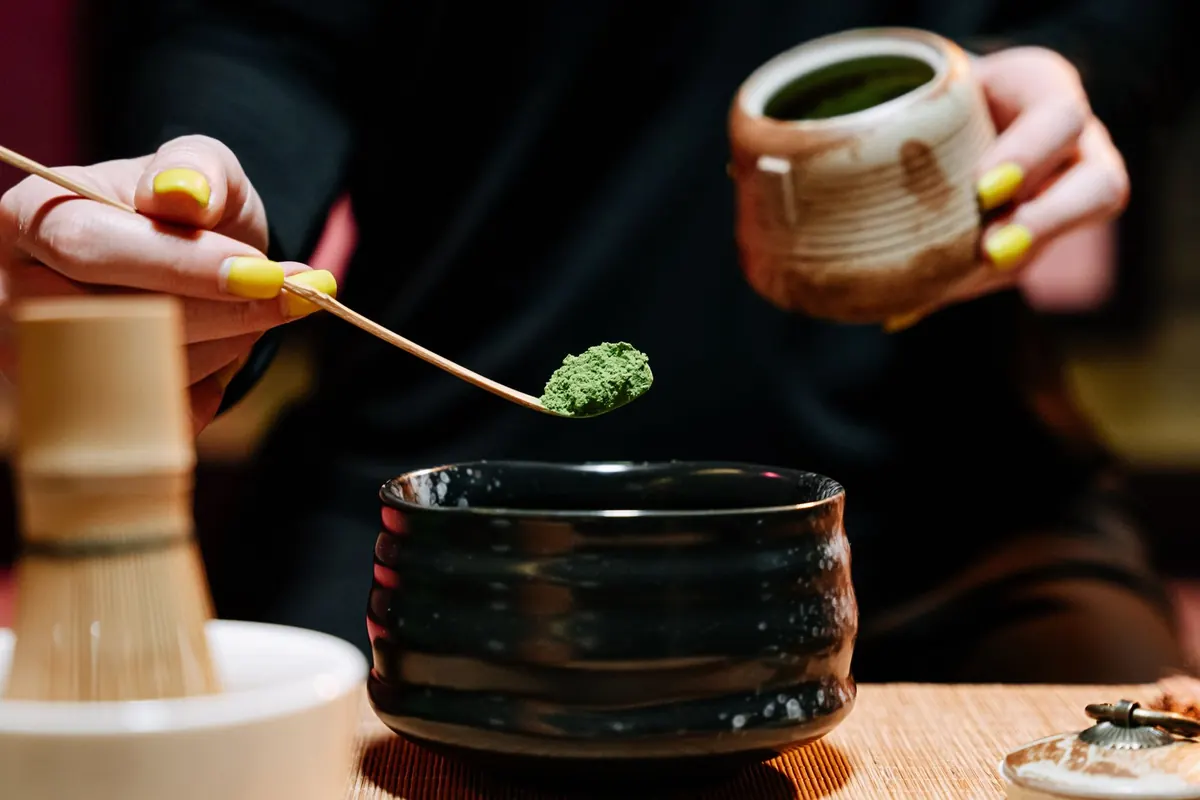
Ceremonial grade is the top of the pyramid — the matcha intended to be whisked with hot water and drunk on its own, often in the context of a traditional Japanese tea ceremony (chanoyu). It's made from the youngest first-harvest leaves, meticulously de-stemmed and de-veined, and stone-ground into an ultrafine powder that feels almost like silk between your fingers.
What Makes It Ceremonial
- Color: a bright, almost luminous emerald green
- Aroma: sweet, creamy, and vegetal, with notes of fresh-cut grass or edamame
- Flavor: deep umami, low bitterness, a natural sweetness that lingers
- Texture: smooth, with no grittiness or sediment
- Price: often $1 to $3 or more per gram
Within ceremonial grade there are further distinctions. Usucha ("thin tea") is whisked with about 2 grams of matcha to 70 ml of water at roughly 70–80°C (160–175°F) and produces a light, frothy bowl. Koicha ("thick tea") uses double or triple the powder with less water, creating a syrupy, intensely flavored paste. Koicha requires the very best leaves, because any bitterness is magnified.
How to Use Ceremonial Grade
Keep it simple. Ceremonial matcha is at its best when nothing competes with it:
- Whisk it into hot (not boiling) water with a bamboo chasen in a wide bowl
- Sip it plain as usucha, or prepare koicha for a special occasion
- Add a small amount to a delicate dessert where its flavor should shine, like matcha namagashi or a lightly sweetened panna cotta
What you should not do is dump it into a sugary blender drink. That's like using single-origin espresso in a whipped cream-topped milkshake — delicious, maybe, but a waste of nuance.
Culinary Grade Matcha
Culinary grade matcha is made for cooking, baking, and blending. It typically comes from later harvests, uses larger and older leaves, and may include some stems and veins. It's ground more coarsely and often with industrial equipment, which is why it's dramatically more affordable — sometimes under $0.20 per gram.
What Makes It Culinary
- Color: duller olive or yellow-green
- Aroma: grassy and slightly hay-like, with less sweetness
- Flavor: more astringent and bitter, with a stronger tannic bite
- Texture: coarser, sometimes visibly grainy
- Price: budget-friendly, sold in larger bags
That bitterness isn't a flaw — it's the point. When matcha is mixed with sugar, dairy, fat, or fruit, its sharp edges cut through richness and keep the finished product from tasting flat. A delicate ceremonial matcha would simply disappear inside a batch of cookie dough.
How to Use Culinary Grade
- Lattes and smoothies: whisk with a little hot water first to dissolve lumps, then add milk and sweetener
- Baking: swap into cakes, muffins, shortbread, and macarons for color and flavor
- Frozen treats: matcha ice cream, gelato, and popsicles
- Sauces and dressings: blend into yogurt, vinaigrettes, or a savory rub for fish
- Novelty drinks: matcha cocktails, sodas, and frappés
Because culinary matcha is more forgiving of heat and sugar, it's also the smarter choice when you're experimenting. Nobody wants to burn through a $40 tin while figuring out how much powder makes a good batch of brownies.
The Middle Ground: Premium and Latte Grades
Between the two poles sit a cluster of labels you'll see constantly: premium, latte grade, everyday, barista. These usually describe matcha that's better than straight culinary but not refined enough for a formal tea ceremony — often a second-harvest or blended product.
This is the sweet spot for most households. It's smooth enough to drink plain with a splash of milk, affordable enough to use daily, and flavorful enough to hold its own in a hot latte. If you're new to matcha, start here.
How to Choose the Right Grade
A few practical rules of thumb:
- Drinking it plain? Buy ceremonial. The flavor is the entire experience.
- Making lattes daily? Premium or latte grade gives you the best balance of taste and cost.
- Baking or blending? Culinary grade, every time.
- Checking quality? Look for a harvest date, a specific origin (Uji, Nishio, Yame, and Kagoshima are well-known regions), and a vivid green color.
- Reading labels skeptically? "Ceremonial" has no legal definition, so a cheap tin can claim it freely. Price per gram and origin details are more reliable signals than the word itself.
The best grade of matcha isn't the most expensive one — it's the one that matches what you're about to make.
Storing Matcha So It Stays Fresh
Matcha is fragile. It oxidizes quickly and loses its color, aroma, and umami within weeks of opening if you're careless. Protect your investment:
- Keep it in an airtight container away from light, heat, and moisture
- Store the tin in the refrigerator, not next to your spices
- Let it come to room temperature before opening to prevent condensation
- Use it within one to two months of opening for the best flavor
- Sift clumps out with a fine mesh strainer before whisking
A Final Word
Matcha grading is part science, part tradition, and part marketing — but once you understand the logic behind it, shopping becomes far less intimidating. Ceremonial grade rewards quiet attention; culinary grade rewards experimentation and generous quantities. Buy according to how you'll actually drink it, store it well, and don't be afraid to keep two tins on hand: one for the bowl, one for the blender.
Photo: Ivan S / Pexels