A pot of tea and a plate of food can flatter each other, or they can fight for attention. The difference rarely comes down to expensive leaves or formal rules. It comes down to a few habits of taste — weight, strength, sweetness, aroma — that you can learn at your own kitchen table, with whatever is already in the cupboard.
What follows is a beginner's map: what to drink with eggs and toast, what belongs beside a sandwich, and which teas survive a slice of chocolate cake. Nothing here requires a tasting certificate. It requires paying attention, one sip at a time.
Two Principles Do Most of the Work
Nearly every pairing below grows from two ideas.
Match weight to weight. A delicate tea vanishes beside a heavy dish, and a forceful tea flattens a fragile one. White peony next to beef stew tastes like warm water. Assam next to a plate of melon tastes like tannin and regret.
Let one side carry the meal. Rich, buttery, fried, or creamy food wants a tea with enough grip to cut through it — briskness, a little astringency, or a roasted edge. Light food wants a tea that stays quiet in the background.
There is also a practical step that beginners skip: taste the tea on its own first. If it is bitter from a long steep or flat from water that never got hot enough, no food will fix it. Fix the cup, then worry about the pairing.
Breakfast: Pair the Tea to the Plate
Morning tea is often chosen out of habit — the same box, the same mug, every day. Breakfast is actually the easiest meal to experiment with, because the food is repetitive and predictable.
Light plates
- Buttered toast, yogurt with honey, cut fruit: dragon well, jasmine green, or a soft white tea.
- Porridge with cinnamon and raisins: hojicha or a lightly roasted oolong, which echo the toasted, nutty notes.
- Smoked salmon on a bagel: second flush Darjeeling or sencha. If you like smoke with smoke, lapsang souchong works surprisingly well.
Heavier plates
Eggs, bacon, sausage, fried potatoes, and cheese all reward a malty black tea. Assam or an English Breakfast blend with a splash of milk stands up to salt and fat without turning harsh. Keep the steep short — three minutes is plenty — or the cup turns drying right when you want it smooth.
Lunch: The Midday Case for Briskness
Lunch tends to be assembled rather than cooked: sandwiches, soups, leftovers, a bowl from the corner shop. The tea should match the energy of the plate.
- Cheese or ham sandwich: a floral oolong such as tieguanyin, or a bright Ceylon.
- Tomato soup and grilled cheese: roasted oolong or hojicha. The roast handles the acid and the melted cheese at once.
- Sushi, rice bowls, plain noodles: sencha or genmaicha. Grassy green tea and rice is one of the oldest comfortable marriages in tea.
- Curry, chili, spiced noodles: pu-erh or a strong Assam with milk — something earthy and steady rather than fragrant.
- Big salads with vinaigrette: sencha, or a white tea if the dressing is creamy.
If you drink tea with lemon, keep it away from very astringent blacks; the acid makes them taste sharper. A squeeze works better in Ceylon or a green tea than in a tannic breakfast blend.
The Afternoon Tea Table
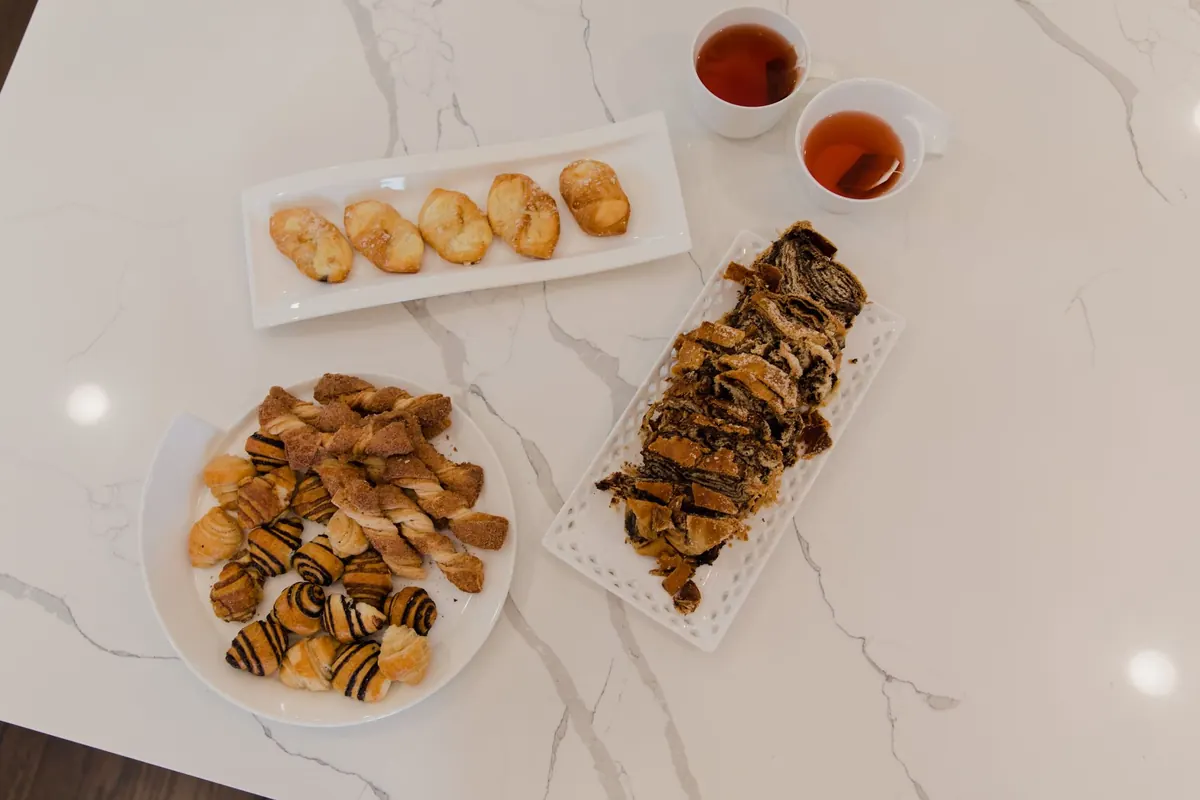
The classic three-tier stand is a pairing exercise disguised as a ceremony. The usual order — savories, then scones, then sweets — also happens to be the order of increasing sweetness, which is why one pot rarely suits the whole stand.
- Cucumber and butter sandwiches: first flush Darjeeling or white peony.
- Egg salad or smoked salmon fingers: Ceylon or a light oolong.
- Scones with clotted cream and jam: second flush Darjeeling, malty and bright enough to cut the cream.
- Shortbread and butter cookies: Assam, which meets the butter.
You do not need four pots. Many hosts pour one generous, medium-bodied black tea through the savories and scones, then switch to something roasted or smoky for the sweets. If you own only one tin, choose the tea that suits the course you care about most.
Dessert: Sweet Food Needs a Bitter Edge
Sugar dulls the palate, so a sweet dessert flattens a sweet, gentle tea. The fix is contrast: bitterness, roast, or smoke.
- Dark chocolate: lapsang souchong, roasted oolong, or aged pu-erh.
- Milk chocolate and caramel: Assam or hojicha. Both carry their own caramel notes.
- Lemon tart, fruit tarts: Ceylon, or a green tea with citrus in the aroma.
- Cheesecake: jasmine green or a light, buttery oolong.
- Apple tart, anything with cinnamon: hojicha or a roasted oolong.
- Custard, vanilla, rice pudding: silver needle or a soft white tea, which stays sweet without competing.
A word on timing: if caffeine keeps you awake, keep after-dinner cups small and early, or choose roasted hojicha, which is low in caffeine, or a caffeine-free herb such as rooibos or peppermint. Herbals are not true teas, but they pair by the same logic. If caffeine affects a medical condition of yours, ask a doctor rather than a tea blog — including this one.
A Cheat Sheet for the Kitchen
When in doubt, match the tea on the left to the food on the right.
- Delicate: white tea, first flush Darjeeling, dragon well → melon, custard, buttered bread
- Grassy and green: sencha, genmaicha → rice, seafood, vegetables, salads
- Floral: jasmine, light oolongs → fruit, cheesecake, delicate pastries
- Brisk black: Ceylon, second flush Darjeeling → sandwiches, scones, afternoon tea
- Malty black: Assam, breakfast blends → eggs, bacon, milk chocolate
- Roasted: hojicha, roasted oolong → toast, nuts, caramel, apple
- Smoky: lapsang sou
Photo: RDNE Stock project / Pexels