Some teas have a season. A first-flush Darjeeling poured in May tastes of cut grass, apricots and cold air; the same leaf in December can feel thin and lost in the cup. Meanwhile the smoky lapsang you ignored all summer suddenly makes sense in February. A seasonal tea shelf isn't about buying more tea. It's about rotating what you already love so the cup in your hand matches the weather at the window.
The Rotation Principle: Four Anchors, Two Guests
Most tea collections fail in one of two ways. They grow into a crowded cabinet of half-finished bags, or they narrow to a single daily habit that stops being interesting by March. The fix is a small amount of structure.
Keep four anchor teas — one you reach for in each season — plus two or three guests that rotate in and out as the mood strikes. Anchors are the teas you rebuy without thinking: a sencha, an Assam, a roasted oolong, a chai blend. Guests are the experiments: a new dan cong, a friend's homemade blend, a white tea you brought home from a trip.
- Buy small. Fifty to one hundred grams is enough to learn a tea without watching it go stale.
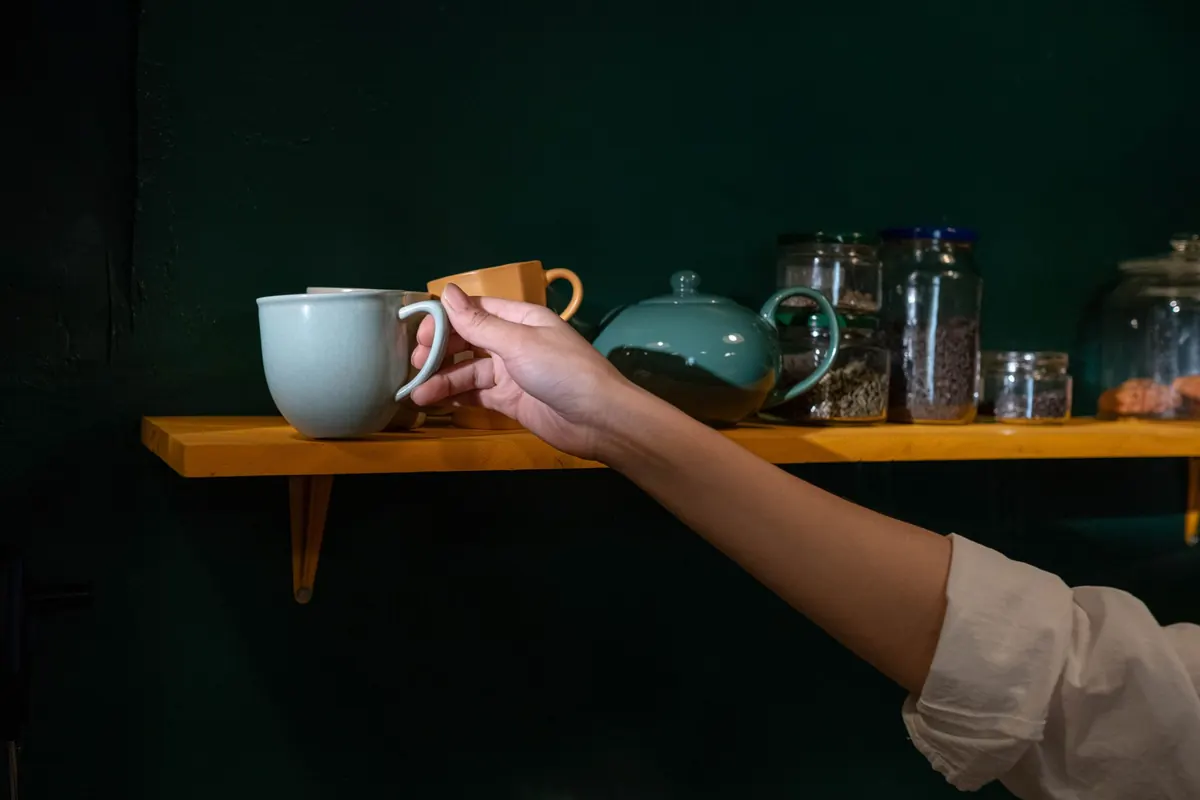
- Store dark, cool and dry. Airtight tins away from the stove and away from your spice jar. Tea absorbs whatever sits beside it.
- Label everything. Name, date opened, and where you bought it. You will not remember in October.
- Refrigerate only if you must. Sealed green tea keeps longer in the freezer, but let the tin come to room temperature before opening it, or condensation will ruin the leaf.
Spring: Green, Fresh, and Floral
Spring teas are picked young and taste like it. This is the moment for first-flush Darjeeling with its muscatel lift, Japanese sencha and gyokuro, Longjing from the year's earliest pluck, and the pale, honeysuckle sweetness of silver needle white tea. Lightly oxidized oolongs — bao zhong, tie guan yin — belong here too.
Brew cooler than you think. Around 70–80°C for greens, with short steeps of thirty to sixty seconds, keeps the cup sweet instead of bitter. Green tea is the fastest-fading tea on your shelf, so drink it in the months after you buy it rather than saving it for a special occasion.
Summer: Iced, Cold-Brewed, and Bright
Hot, heavy teas feel wrong in July. Cold brewing solves most of the problem: it pulls sweetness and aroma out of the leaf while leaving much of the bitterness behind, which means cheaper grades still taste good.
- Cold brew, general starting point: about one tablespoon of leaf per 500 ml of cold filtered water, refrigerated six to eight hours, then strained. Green tea needs less time — four to six hours — while hojicha and roasted oolong are forgiving and can go overnight.
- Flash chilling: brew hot but double strength, then pour straight over a full glass of ice. Best for jasmine, Darjeeling and fruit-forward blacks.
- Sparkling tea: brew strong, chill, top with soda water and a strip of citrus peel.
- Herbal and fruit: hibiscus, mint and lemongrass make a tart, caffeine-free pitcher that keeps for three days in the fridge.
Add sweetness as a syrup, not as granules — it dissolves instantly in cold liquid. Peach and oolong, cucumber and green tea, mint and sencha: all of these are simple and taste far better than anything from a can.
Fall: Spiced, Toasted, and Transitional
Autumn is the hardest season to get right because the weather refuses to commit. Second-flush Darjeeling, with its deeper muscatel character, bridges warm afternoons and cool evenings. Roasted oolong and hojicha bring a toasted, nutty quality that suits the shift. This is also when chai starts earning its place again.
Mixing Your Own Chai
Start with a strong black base — Assam or a robust Ceylon — then add whole spices: green cardamom pods, a clove or two, a cinnamon stick, fresh ginger, a few black peppercorns. Simmer the spices in water for five minutes before adding the tea and milk, then strain. Whole spices keep their perfume far longer than pre-ground blends, and you can adjust the heat to your own taste rather than someone else's.
Winter: Warming, Malty, and Dark
Cold weather calls for teas that can stand up to it. Assam with milk, Keemun's cocoa and smoke, Yunnan gold, ripe pu-erh with its earthy depth, and aged white tea that has softened into something honeyed and dark. A small amount of lapsang souchong goes a long way in a winter blend; a whole pot of it is a commitment.
Brew hotter and longer: water just off the boil, three to four minutes for most blacks, and short repeated steeps for pu-erh in a gaiwan. If you drink tea late in the evening and caffeine keeps you awake, keep a separate tin of rooibos, peppermint or chamomile for after dinner. Anyone managing a health condition that caffeine affects should check with a healthcare professional about what suits them.
Putting the Shelf Together
- Empty the cabinet and smell every open bag. Flat, papery, or dusty-smelling tea goes into the compost.
- Write down the four teas you actually finished this year. Those are your anchors.
- Buy one seasonal tea you've never tried, in the smallest size available.
- Keep a transition tin for the awkward weeks — late March, mid-October — with a flexible tea like an oolong or a light black.
- Revisit the shelf each season and adjust. Two anchors may swap places; that's the point.
The Shelf Changes, the Habit Doesn't
A seasonal shelf is less a shopping list than a rhythm. You drink greens when they're fresh, cold-brew when the kitchen is too hot for a kettle, and reach for malt and spice when the windows frost over. Nothing on the shelf is precious and nothing is wasted. Choose four teas you trust, leave room for a couple of curiosities, and let the weather do the deciding.
Photo: Ron Lach / Pexels